
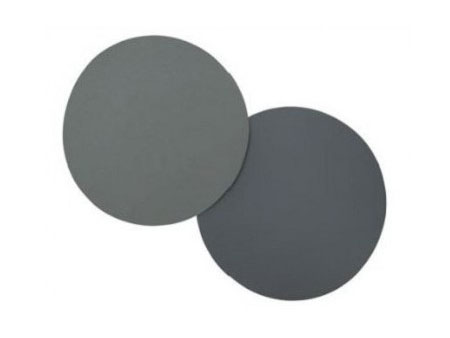
Silicon Carbide (SiC) Applied to Ceramic Product
Silicon carbide (SiC) features hardness second only to diamond and boron carbide and possesses high wear resistance, thus it's used for sliding parts (mechanical seals, etc.).
In addition, it enjoys a high Young modulus and a small coefficient of thermal expansion, thus it's used for components (optical parts, substrates, etc.) that require high precision.
Because it is a dense sintered body, it can be mirror-finished. It features high temperature resistance of over 1400°C and heat shock resistance with excellent chemical stability.
It can be made into SiC glove, SiC sheath, sheet products and thick-walled products.
Processed high purity SiC (high purity SiC) materials of DCG are often used as semiconductor manufacturing equipment parts.
Silicon carbide (SiC) Precision Ceramic Processing:
Silicon carbide (SiC) materials have higher mechanical strength than synthetic alumina and silicon nitride materials, especially in terms of high temperature resistance, wear resistance and corrosion resistance.
Main Features:
- Better wear resistance.
- Better corrosion resistance.
- Excellent oxidation resistance.
- High thermal conductivity, good thermal conductivity.
- Consistent strength under high-temperature environment.
- High thermal conductivity, good thermal conductivity.
Applications:
- Grinder wear parts.
- Ceramic bearings, heat exchangers.
- Chemical pump parts, various nozzles.
- High-temperature cutting tools, fire-resistant board.
- Mechanical wear parts.
- Steel reduction materials, arresters.
- Other semiconductor manufacturing spare parts.
Silicon Carbide (SiC) Characteristics
| General Characteristics | Purity of main components (wt%) | 97 | ||
|---|---|---|---|---|
| Color | Black | |||
| Density (g/cm³) | 3.1 | |||
| Water absorption (%) | 0 | |||
| Mechanical Characteristics | Flexural strength (MPa) | 400 | ||
| Young modulus (GPa) | 400 | |||
| Vickers hardness (GPa) | 20 | |||
| Thermal Characteristics | Maximum operating temperature (°C) | 1600 | ||
| Thermal expansion coefficient (1/°C x 10-6) | RT~500°C | 3.9 | ||
| RT~800°C | 4.3 | |||
| Thermal conductivity (W/m x K) | 130 110 | |||
| Thermal shock resistance ΔT (°C) | 300 | |||
| Electrical Characteristics | Volume resistivity | 25°C | 3 x 10⁶ | |
| 300°C | - | |||
| 500°C | - | |||
| 800°C | - | |||
| Dielectric constant | 10GHz | - | ||
| Dielectric loss (x 10-4) | - | |||
| Q Factor (x 104) | - | |||
| Dielectric breakdown voltage (KV/mm) | - | |||
Gallery
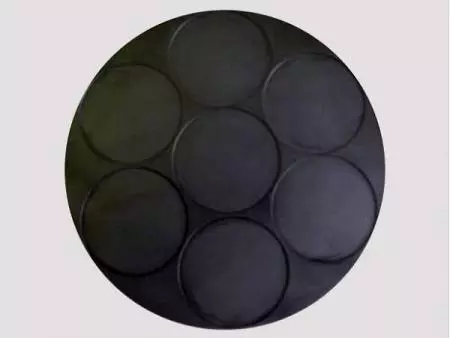 Silicon carbide (SiC) precision ceramic processing
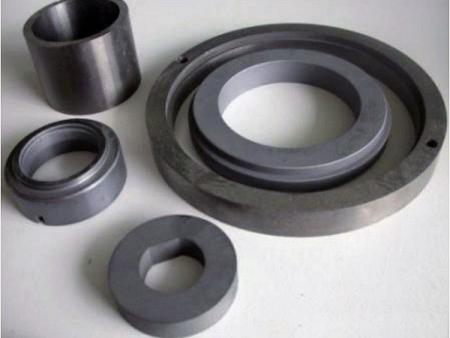 Silicon carbide (SiC) precision ceramic processing
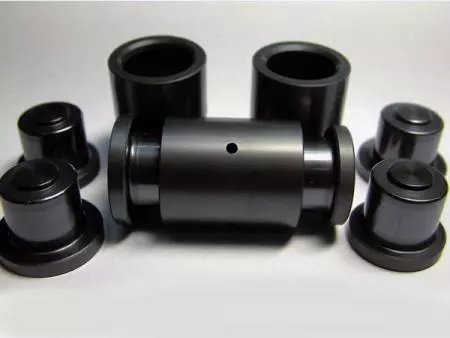 Silicon carbide (SiC) precision ceramic processing
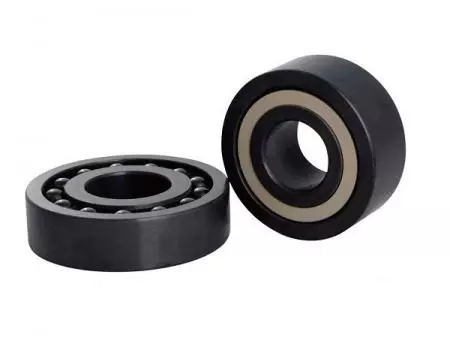 Silicon carbide (SiC) precision ceramic processing